In M&A, a lot of attention goes into getting the deal done, from valuation and structure to the negotiations. Once the deal closes, though, a different kind of work begins. This is where value can be either realized or quietly lost.
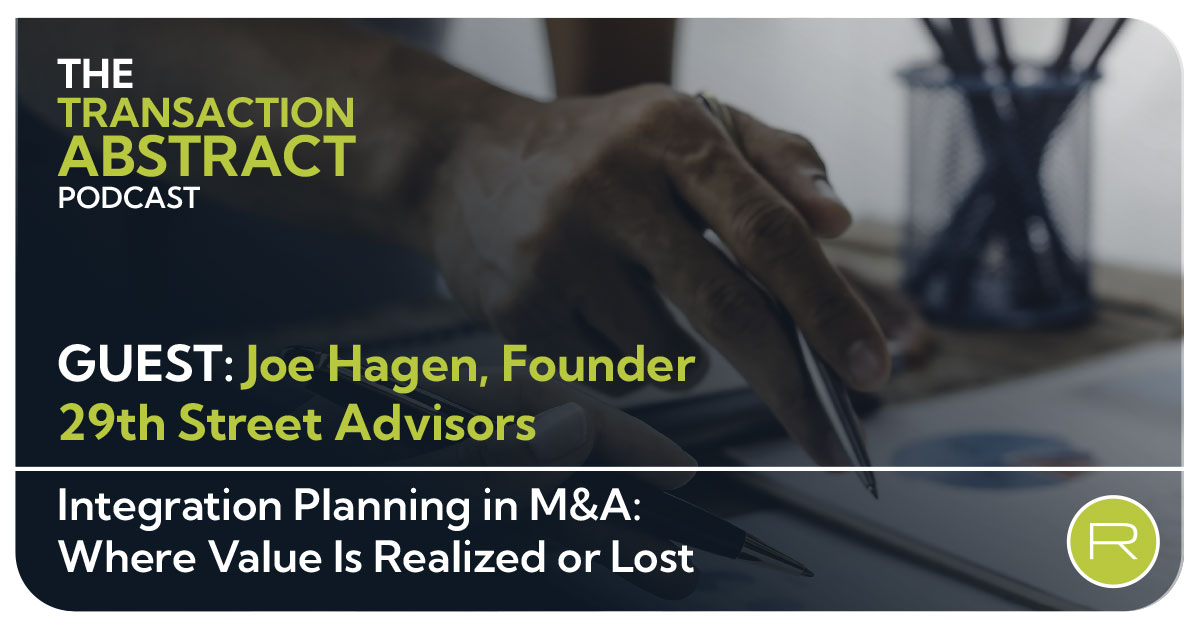
In this episode of the Transaction Abstract Podcast, Redpath’s Joe Hellman sits down with Joe Hagen, founder of 29th Street Advisors, to unpack the role of integration planning after the close. Today’s conversation centers on a simple idea that’s often overlooked: deal strategy only matters if it can be executed.
Joe Hagen brings a perspective grounded in post-merger integration and transformation work across wealth management, fintech, financial services, and beyond. His experience spans corporate roles at Target and U.S. Bank, as well as consulting roles across multiple organizations. Today, Joe works closely with leadership teams to translate deal strategy into clear, executable integration plans.
As he shares in this episode, effective integration planning goes beyond checklists. It includes standing up integration management offices, aligning teams, and navigating the realities of people, processes, and technology. This is the hard work that ultimately determines whether value is realized.
With that in mind, here’s what business owners, operators, and deal teams need to understand.
Integration Isn’t a Phase. It’s the Outcome
One of the clearest takeaways from the conversation is that integration determines whether the deal thesis holds up. While integration leaders are often brought in post-close, the most effective teams involve them much earlier, ideally during diligence when assumptions are still being formed.
When integration leaders have a seat at the table early, they can:
- Pressure test synergy assumptions
- Assess operational complexity
- Identify resource gaps
- Translate strategy into an executable plan
Day One Readiness Starts Before the Deal Closes
“Day One” is often talked about like a milestone. In reality, it’s the result of preparation, and it needs to happen as early as possible. Bringing the integration leader to the table early allows for pressure testing the deal thesis and thinking about it through an operational lens. Here, they can ask how realistic the synergies are and how complex getting the basics right will be.
Those basics include:
- Clear reporting structures for employees
- Stability in systems and payroll
- Clear points of contact for customers
- Consistent service delivery from day one
These are table stakes, and when they’re missed, momentum slows immediately. Early integration planning focuses on stabilizing the business first, then building toward longer-term value creation.
Synergies Are Only as Real as the Plan Behind Them
Most deals are built on a set of expected synergies, including cost savings, revenue growth, and operational efficiencies. The challenge is delivering on those synergies. Early in the deal process, there’s a natural tendency to focus on upside. Without a clear understanding of what it takes to execute, those expectations can drift.
What stood out in this conversation is the importance of connecting strategy to execution:
- What work streams are required?
- Who owns each piece?
- What decisions and when?
- How will progress be tracked and reported?
When those answers aren’t clear, timelines extend, costs increase, and value begins to erode. As Joe shared, “It can be tempting to move quickly through the planning. We think we’re saving time and money by devoting minimal resources, but in the end, that can slow down how fast you actually realize the value and can actually increase overall integration costs.”
Where Deals Start to Break Down
Across industries and deal types, a few consistent risks recur. Each of these ties back to the same root issue: planning that didn’t go deep enough, early enough.
- Underestimating the Work - Integration takes time and resources. Trying to move too quickly without the right structure often creates rework and delays.
- Lack of Leadership Alignment - If leadership isn’t aligned on priorities and operating model, teams hesitate, and execution slows.
- Losing Key People - Retention planning is often reactive. By the time it’s addressed post-close, it can already be too late. Influence within an organization isn’t always obvious on paper.
- Disruption to Customers and Employees - Uncertainty during transition can impact service levels and internal morale. Both directly affect value.
The Role of the Integration Leader
The value of integration leadership lies less in managing tasks and more in aligning people, decisions, and priorities. The most effective integration leaders operate at the intersection of strategy and execution. That’s what allows deals to move forward with clarity instead of friction.
The strongest integration leaders:
- Stay connected to the deal thesis and intended outcomes
- Build and manage structured work streams
- Create visibility for leadership into progress and risk
- Coordinate across teams to maintain momentum
Setting the Right Expectations And Focusing on What Matters First
There’s a natural instinct in deals to position integration as smooth and seamless. In reality, integration requires change, new processes and systems, and evolved ways of working. The teams that navigate this best are the ones that are upfront about it, building trust by communicating clearly around what’s changing, why it matters, and how it impacts employees and customers.
One of the more practical insights from the episode is prioritization. Not everything needs to happen on Day One. Strong integration plans focus on stabilizing operations, maintaining service continuity, and creating clarity for leaders and teams. From there, more complex initiatives can be phased in with less disruption. Challenging assumptions about urgency can prevent unnecessary pressure on teams and allow for more thoughtful execution.
Final Thought: Discipline Outperforms Speed
In M&A, there’s a tendency to move fast. Speed matters, but only when it’s supported by structure. The teams that consistently realize value are the ones that plan early, align leadership, define clear ownership, and execute with discipline. At the end of the day, execution creates the real value, which is why planning is so important. As Joe Hagen shared, “Disciplined, thoughtful execution tends to outperform speed for its own sake.”
Listen to the full episode of The Transaction Abstract Podcast to hear Joe Hellman and Joe Hagen discuss integration planning and how early strategy can help protect the value created in a business over time.
Notify me of new podcast episodes!
-2.webp?width=1200&height=337&name=CTAtransaction-abstract%20(1)-2.webp)


 Joe Hellman, CPA

 Joe Hellman, CPA: Sep 8, 2026